

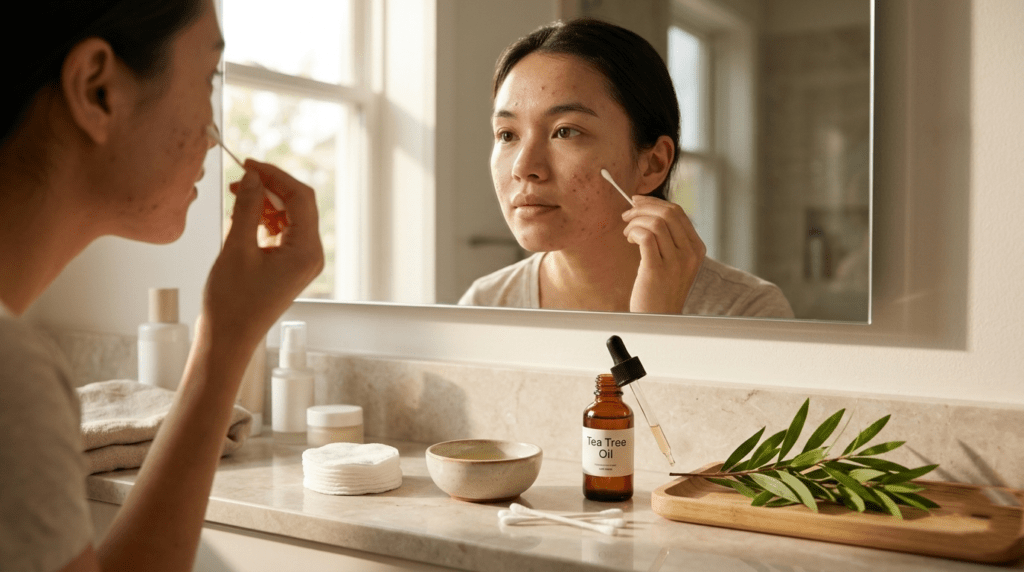
For centuries, Australian Aboriginal communities used Melaleuca alternifolia leaves as a powerful antibacterial remedy — and today science confirms why. Tea tree oil for acne and scars is one of the most clinically validated natural treatments available, offering a gentler yet effective alternative to harsh chemical spot treatments. In this guide, you’ll discover exactly how to use this potent essential oil safely across 8 proven methods, with the critical dilution rules that make the difference between glowing skin and irritation.
Why Tea Tree Oil Works for Acne
The secret is terpinen-4-ol — tea tree oil’s primary active compound, making up 30–48% of pure Melaleuca alternifolia oil. Terpinen-4-ol directly disrupts the cell membranes of Cutibacterium acnes (the bacteria behind most breakouts), killing them without contributing to antibiotic resistance. It simultaneously reduces the inflammatory cytokines that cause pimple redness and swelling, and mildly regulates sebum production — addressing all three root drivers of acne in one natural ingredient.
8 Proven Benefits of Tea Tree Oil for Skin
1. Kills Acne-Causing Bacteria
Terpinen-4-ol penetrates pore walls and eliminates C. acnes bacteria without stripping the skin’s natural microbiome — unlike many antibiotic treatments.
2. Reduces Inflammation and Redness
Its anti-inflammatory compounds visibly reduce pimple swelling and redness within 24–48 hours of spot treatment application.
3. Unclogs Pores Naturally
Tea tree oil’s solvent properties dissolve excess sebum and dead cell buildup inside pores, preventing the congestion that leads to blackheads and whiteheads.
4. Fades Acne Scars and Dark Spots
By reducing inflammation during the active breakout stage, tea tree oil for acne and scars minimizes post-inflammatory hyperpigmentation at the source. For a complete guide to natural scar fading, see our article on acne scars and dark spot treatment.
5. Controls Excess Oil Production
Regular use reduces sebaceous gland activity, making it an excellent addition to any oily skin care routine for long-term sebum management.
6. Prevents Future Breakouts
Used as a daily toner or serum, tea tree oil maintains an antibacterial environment on skin that makes it significantly harder for new breakouts to establish.
7. Gentle Alternative to Benzoyl Peroxide
A landmark study found 5% tea tree oil gel as effective as 5% benzoyl peroxide for acne — with fewer side effects including dryness, peeling, and redness.
8. Soothes Irritated Skin
At correct dilutions, tea tree oil calms reactive, inflamed skin — making it suitable even for sensitive skin types when properly prepared.
How to Dilute Tea Tree Oil Safely
⚠️ NEVER apply tea tree oil directly to skin undiluted. Pure tea tree oil is a concentrated essential oil that causes burning, redness, and chemical irritation at 100% strength.
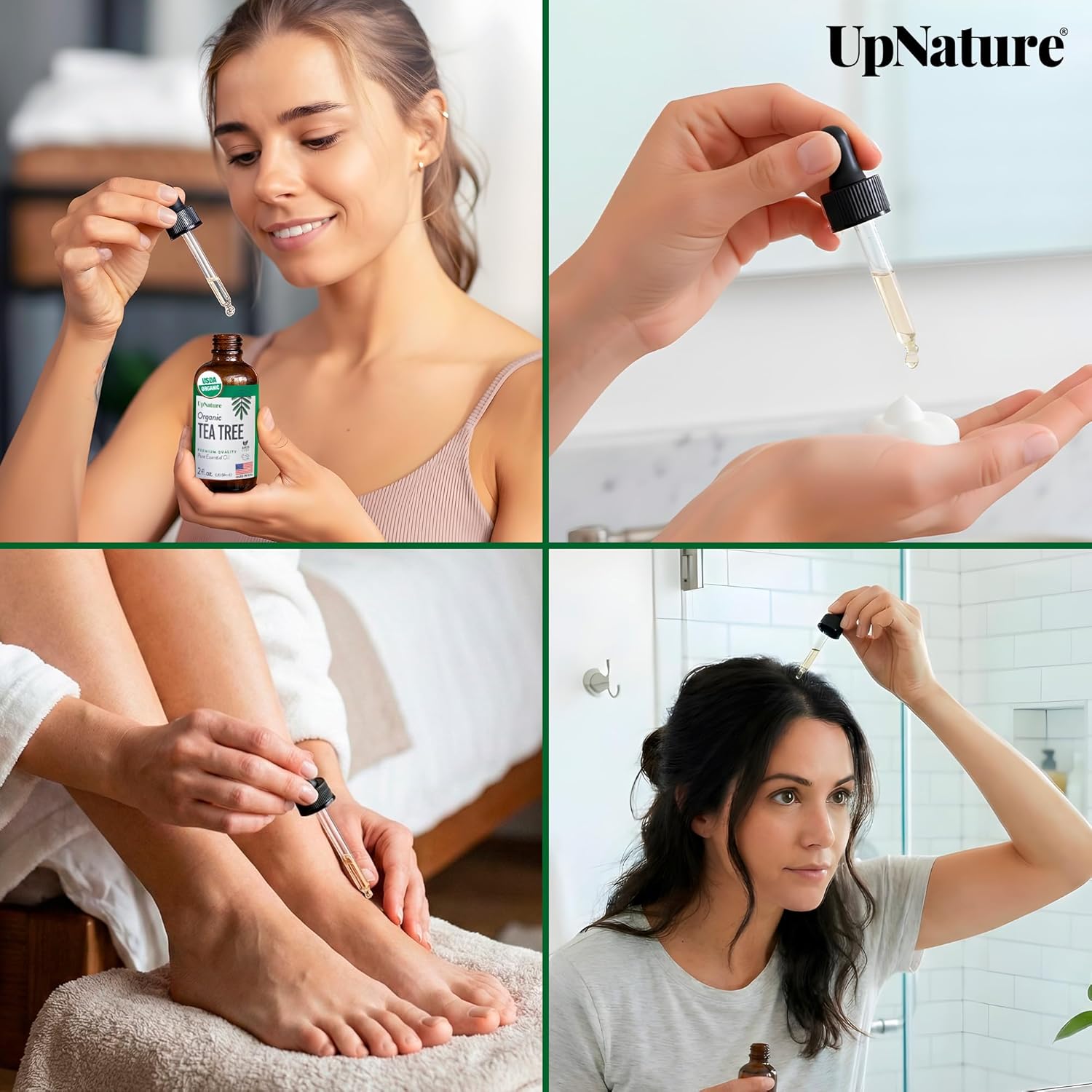
Safe dilution ratios: Spot treatment: 1–2% (1 drop per teaspoon carrier). Face serum: 1–3% (2–3 drops per tablespoon carrier). Body acne: 5–10% (5–10 drops per tablespoon carrier).
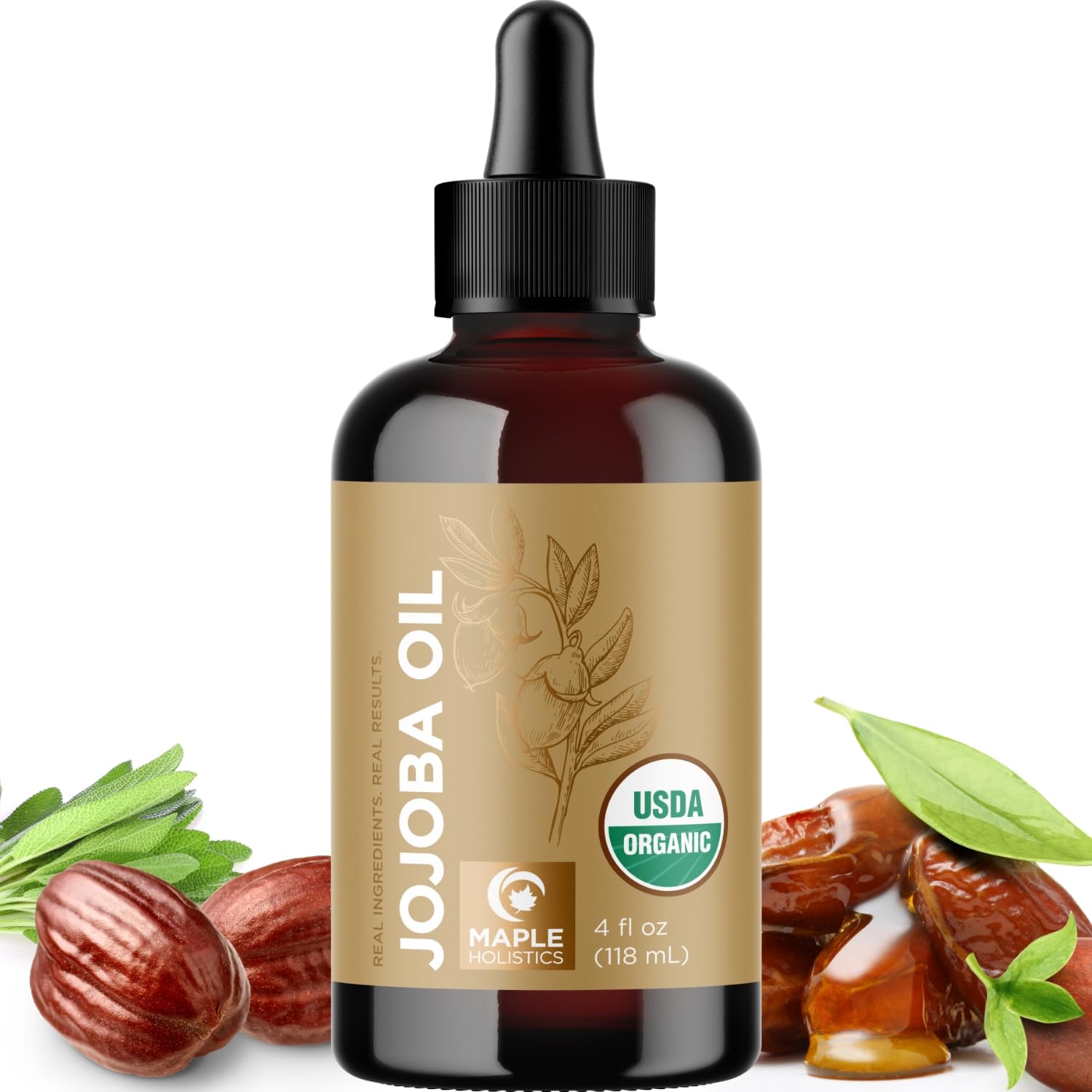
Best carrier oils: Jojoba oil (non-comedogenic, closest to skin’s sebum), aloe vera gel (soothing, lightweight), rosehip oil (anti-scarring). Choose a pure tea tree essential oil (100%) from Australian Melaleuca alternifolia in a dark glass bottle for maximum potency and shelf life.
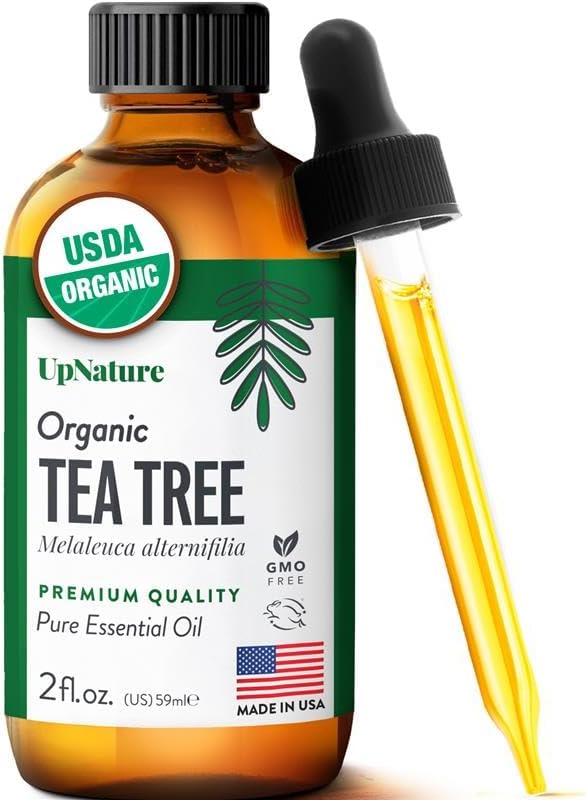
8 Ways to Use Tea Tree Oil for Acne
1. Tea Tree Spot Treatment
Mix 1 drop tea tree oil with ½ teaspoon aloe vera gel. Apply with a cotton swab directly to the pimple and leave overnight. For more pimple-fighting tips, see our guide on how to get rid of pimples overnight.
2. Tea Tree Face Serum
Add 4–6 drops of tea tree oil to 1 tablespoon of jojoba oil . Apply 2–3 drops to clean skin after cleansing, before moisturizer, morning and night.
3. Tea Tree Face Mask
Stir 2 drops into 1 tablespoon raw honey or kaolin clay. Apply for 10–15 minutes, rinse with lukewarm water. Use once weekly as a deep-cleansing treatment.
4. Tea Tree Toner
Add 5 drops to 100ml witch hazel in a spray bottle. Shake before each use and mist onto clean skin morning and night. Refrigerate to extend freshness.
5. Tea Tree Steam Treatment
Add 3–4 drops to a bowl of just-boiled water. Drape a towel over your head and steam your face for 5–8 minutes. Use weekly to deeply purge congested pores.
6. Tea Tree + Aloe Vera Gel
Mix 2 drops tea tree oil into 1 tablespoon pure aloe vera gel for a lightweight, soothing all-over acne treatment. This combination is ideal for active breakout days. Discover more aloe vera uses in our complete guide on aloe vera for face.
7. Tea Tree Overnight Mask
Combine 2 drops tea tree oil with ½ teaspoon virgin coconut oil. Apply a thin layer to cleansed skin 2–3 nights per week. Rinse in the morning. Not for oily or acne-prone skin types — use the aloe version instead.
8. Tea Tree Body Acne Treatment
Add 10 drops tea tree oil to 2 tablespoons of unscented body lotion. Apply to back, chest, or shoulders after showering to prevent and treat body acne effectively.
Tea Tree Oil Safety and Side Effects
Always patch test first — apply diluted oil to your inner arm and wait 24 hours before facial use. Possible side effects include redness, burning, and dryness if used undiluted or at excessive concentrations. Tea tree oil is toxic if ingested — store safely away from children. Exercise caution during pregnancy and nursing, and keep away from eyes and mucous membranes at all times.
Best Tea Tree Oil Products for Acne
Choose 100% pure Melaleuca alternifolia essential oil from Australia — this is the species with the highest terpinen-4-ol content. Look for organic certification, a dark amber glass bottle (protects from light degradation), and a terpinen-4-ol content of 30%+ on the label. An organic tea tree oil + jojoba carrier oil set gives you everything needed for safe, effective daily acne treatment from day one.
Tea Tree Oil vs Benzoyl Peroxide
Both target acne bacteria effectively at equivalent concentrations (5%). Tea tree oil is significantly gentler — causing less dryness, peeling, and photosensitivity — making it the better choice for sensitive and dry skin types. Benzoyl peroxide works faster (days vs weeks) but carries higher irritation risk. For severely inflammatory acne, the two can be alternated (morning BP, night tea tree) under dermatological guidance.
How Long Until Results?
Individual pimples respond within 24–48 hours of spot treatment. Overall acne improvement takes 4–8 weeks of consistent use. Scar fading from reduced inflammation develops over 8–12 weeks. Consistency and patience are non-negotiable — skipping days resets the antibacterial environment tea tree oil builds on skin over time.
📌 Pin this tea tree oil acne guide! Save these 8 methods and dilution ratios to your Clear Skin board. Natural acne solution that actually works! [Pinterest Pin Button]
Frequently Asked Questions
Can I apply tea tree oil directly on pimples?
No — always dilute first. Mix 1 drop with ½ teaspoon aloe vera gel or jojoba oil before applying to skin. Undiluted tea tree oil causes burning and irritation.
How long should I leave tea tree oil on my face?
Diluted spot treatments can be left overnight safely. Face masks should be rinsed after 10–15 minutes. Serums and toners remain on skin throughout the day or night.
Can tea tree oil remove acne scars?
It reduces post-inflammatory hyperpigmentation (PIH) by minimizing inflammation during active breakouts. It works best on fresh marks — expect gradual fading over 8–12 weeks of consistent use.
Is tea tree oil better than benzoyl peroxide?
For sensitive skin, yes — it’s gentler with fewer side effects at comparable effectiveness. For severe or cystic acne, benzoyl peroxide acts faster. Many people use both strategically for best results.
Can tea tree oil make acne worse?
If used undiluted or at excessive concentrations, it can trigger irritation and rebound oil production that worsens breakouts. Always start at 1% dilution and patch test before full-face use.
Conclusion
Tea tree oil for acne and scars is one of the most powerful natural antibacterial treatments available — but its effectiveness is entirely dependent on proper dilution and consistent application. Start small: tonight, dilute 1 drop in ½ teaspoon aloe vera gel and apply it to your most active pimple with a cotton swab. Monitor your skin’s response over 24 hours, then build toward a full routine. Patience is the price of clear skin — and tea tree oil is absolutely worth it.
